
The days are getting shorter, it rains more often, and the temperature is dropping. It's that time of year when many people trade their running shoes for the couch. It's understandable: it's dark, wet, and cold.
But what if we told you this is the period where you can make the biggest gains, both physically and mentally?
At Make The Rules, we believe there's no such thing as "bad weather," just the wrong mindset and outfit. Don't let the elements hold you back. Here are the undeniable benefits of running in fall and winter
The 5 Golden Benefits of Cold Runs
1) The Well-Deserved Warmth Afterwards: Double Enjoyment

You know the feeling: you step into your warm house after a cold, brisk run. The chills disappear, replaced by an intense, comforting warmth. That wonderful, circulatory feeling from head to toe is the ultimate reward.
The benefit: It's a simple, physical satisfaction that makes you feel the mental victory even more. The shower afterward? A pure moment of luxury.
2) Boost your metabolism and calorie burning
Your body has to work harder to stay warm in cold weather. This boosts your metabolism, causing you to burn more calories during your run than in milder temperatures. Some studies suggest you can burn up to 34% more calories [1]! So, you should feel less guilty this holiday season about ingesting a few extra calories with yet another celebratory meal or drink..
The benefit: You train more efficiently and your body learns to cope better with temperature differences, which leads to so-called 'cold acclimatization'.
3) The Mental Powerhouse: Building Resilience

Running when the sun is shining is easy. Going out when it's stormy or dark requires perseverance. Every time you overcome that "voice" in your head telling you to stay inside, you build mental resilience [2].
The benefit: This perseverance carries over into every other aspect of your life—work, projects, relationships. You Make The Rules for yourself, and that's the strongest mindset there is.
4) A Natural Kick Against the Winter Blues (SAD)
Shorter days and less sunlight can lead to the infamous winter blues (Seasonal Affective Disorder - SAD). Running outdoors, even on a cloudy day, provides exposure to daylight and boosts the production of vitamin D and serotonin (the “happiness hormone”) [3].
The benefit: It helps reset your circadian rhythm, improves your mood, increases your energy levels, and can reduce stress. There's hardly a better remedy for the blues.
5) You'll Become a Better, Stronger Runner
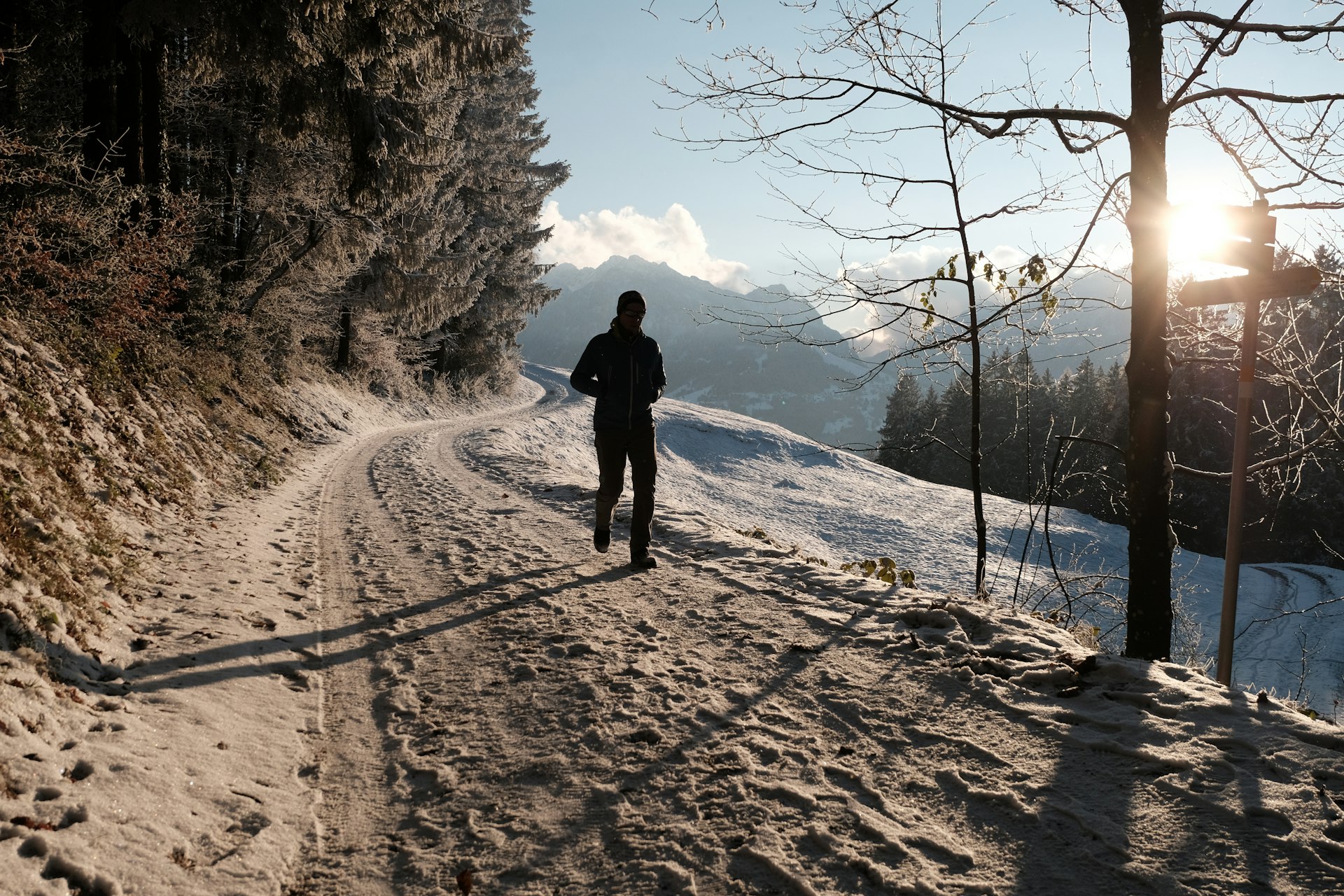
Colder temperatures are actually ideal for endurance performance. Your body needs to use less energy to cool down, allowing you to maintain a higher heart rate for longer. Moreover, wet, slippery trails and running in the dark force you to run more deliberately and with shorter strides.
The benefit: You'll subconsciously improve your running form and strengthen small, stabilizing muscles. When spring arrives and conditions become "easier," you'll reap the benefits with improved speed and endurance.
The Rules of the Cold Run
To make the most of these benefits, there are a few rules to keep in mind:
- Rule #1: Think Layers (3 is the Magic): Start with a thermal base layer, then an insulating layer, and finally a wind and water-resistant outer layer. Don't forget your hat and gloves – you lose a lot of heat through your head and hands.
- Rule #2: Visibility is Key: Wear reflective clothing, a light (headlamp or chest lamp) and bright colours, especially when walking in the dark.
- Rule #3: Warm-up is king: Your muscles need extra time to warm up in cold weather. Take the time for a dynamic warm-up indoors before heading out to prevent injury.
Conclusion: Don't let fall and winter put you into a slumber. Make The Rules now to get outside. Your body, your mind, and your future running will thank you.
References
[1] Yoneshiro, T., Matsushita, M., Sakai, J., & Saito, M. (2025). Brown fat thermogenesis and cold adaptation in humans. Journal of physiological anthropology, 44(1), 11. https://doi.org/10.1186/s40101-025-00391-w
[2] Gameiro, N. & Rodrigues, F. & Antunes, R. & Matos, R. & Amaro, N. & Jacinto, M. & Monteiro, D. (2023). Mental Toughness and Resilience in Trail Runner’s Performance. Perceptual and Motor Skills. 130. 1202-1220. https://doi.org/10.1177/00315125231165819.
[3] Peiser, B. (2009). Seasonal affective disorder and exercise treatment: A review. Biological Rhythm Research - BIOL RHYTHM RES. 40. 85-97. https://doi.org/10.1080/09291010802067171.